

What is the role of grinding steel balls in ball mills?
Hey there! As a supplier of Grinding Steel Balls, I'm super excited to share with you all about the role these little guys play in ball mills.
Let's start by getting to know what a ball mill is. A ball mill is a cylindrical device used in grinding (or mixing) materials like ores, chemicals, ceramic raw materials, and paints. It rotates around a horizontal axis, partially filled with the material to be ground plus the grinding medium, which in our case, are the Grinding Steel Balls.
Now, let's dig into the key roles of Grinding Steel Balls in ball mills.
1. Grinding and Size Reduction
The primary function of Grinding Steel Balls in a ball mill is to grind and reduce the size of the material. When the ball mill rotates, the Grinding Steel Balls are lifted up by the inner wall of the mill and then fall down under the influence of gravity. This impact and friction between the balls and the material break the material into smaller pieces. It's like a mini demolition crew inside the mill!
Imagine you're trying to crush a big rock into tiny pebbles. You could use a hammer, but it would take ages. In a ball mill, the Grinding Steel Balls act as hundreds or even thousands of hammers, working simultaneously to break down the material. The more balls you have, and the right size and hardness of the balls, the more efficient the grinding process will be.
2. Mixing and Homogenization
Apart from grinding, Grinding Steel Balls also play a crucial role in mixing different materials. In many industrial processes, it's essential to mix various substances evenly. When the ball mill rotates, the Grinding Steel Balls move around, causing the materials to blend together. This helps in achieving a uniform composition of the final product.
For example, in the production of cement, different raw materials like limestone, clay, and iron ore need to be mixed thoroughly. The Grinding Steel Balls in the ball mill ensure that these materials are well - mixed, resulting in a high - quality cement product.
3. Energy Transfer
Grinding Steel Balls are also important for energy transfer in ball mills. The energy from the rotation of the mill is transferred to the Grinding Steel Balls, which then use this energy to break and grind the material. The efficiency of this energy transfer depends on factors such as the ball size, shape, and the speed of the mill.
If the balls are too small, they may not have enough mass to transfer sufficient energy to break the material. On the other hand, if the balls are too large, they may not be able to move around freely in the mill, reducing the overall grinding efficiency. So, finding the right balance is key.
4. Surface Area Increase
By grinding the material into smaller particles, Grinding Steel Balls increase the surface area of the material. This is important in many chemical and physical processes. A larger surface area allows for more efficient chemical reactions, as there is more area for the reactants to come into contact with each other.
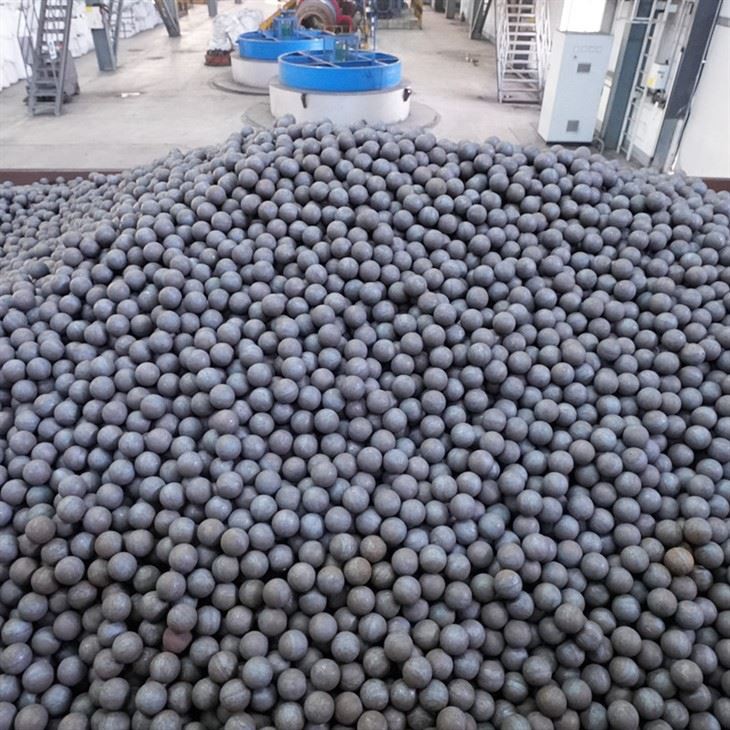

For instance, in the mining industry, when extracting metals from ores, a larger surface area of the ore particles means that the chemicals used in the extraction process can react more effectively with the ore, resulting in a higher yield of the metal.
Different Types of Grinding Steel Balls
There are different types of Grinding Steel Balls available, each with its own characteristics and uses.
- High - Carbon Steel Balls: These balls are known for their high hardness and wear resistance. They are suitable for grinding hard materials like quartz and granite. High - carbon steel balls can withstand high impact forces and are less likely to deform during the grinding process.
- Alloy Steel Balls: Alloy steel balls are made by adding various alloying elements to the steel, such as chromium, manganese, and nickel. These elements improve the hardness, toughness, and wear resistance of the balls. Alloy steel balls are often used in ball mills where high - precision grinding is required.
- Grinding Cylpeb: Grinding Cylpeb is another type of grinding media. It has a cylindrical shape, which provides a different grinding action compared to spherical balls. Cylpebs are often used in applications where a more gentle grinding action is needed, such as in the production of pigments and pharmaceuticals.
Why Choose Our Grinding Steel Balls
As a supplier of Grinding Steel Ball, we take pride in offering high - quality products. Our Grinding Steel Balls are made from the finest materials and are manufactured using advanced techniques.
We ensure that our balls have the right hardness, density, and size distribution to provide optimal grinding performance. Whether you're in the mining, cement, or chemical industry, our Grinding Steel Balls can meet your specific needs.
We also offer excellent customer service. Our team of experts is always ready to help you choose the right type of Grinding Steel Balls for your ball mill and answer any questions you may have.
How to Select the Right Grinding Steel Balls
When selecting Grinding Steel Balls for your ball mill, there are several factors to consider:
- Material to be Ground: Different materials require different types of Grinding Steel Balls. For hard materials, high - carbon or alloy steel balls are a good choice. For softer materials, you may be able to use lower - cost balls.
- Mill Size and Speed: The size and speed of the ball mill also affect the choice of Grinding Steel Balls. Larger mills may require larger balls, while faster - rotating mills may need balls with higher wear resistance.
- Desired Particle Size: If you need a very fine particle size, you may need to use smaller balls or a combination of different sizes.
Conclusion
In conclusion, Grinding Steel Balls play a vital role in ball mills. They are responsible for grinding, mixing, energy transfer, and increasing the surface area of the material. Choosing the right Grinding Steel Balls is crucial for achieving efficient and effective grinding in your ball mill.
If you're in the market for high - quality Grinding Steel Balls, don't hesitate to get in touch with us. We're here to help you find the perfect solution for your grinding needs. Whether you're a small - scale operation or a large industrial plant, we have the expertise and products to meet your requirements. So, let's start a conversation and see how we can work together to improve your grinding process.
References
- Smith, J. (2018). "The Science of Grinding in Ball Mills". Industrial Grinding Journal.
- Johnson, A. (2020). "Optimizing Grinding Media for Ball Mills". Mining Technology Review.