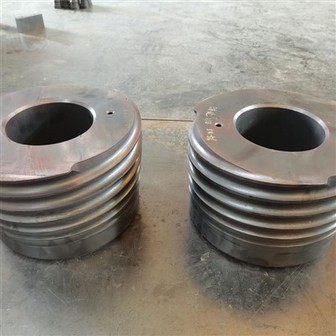

Structural Components Of Rolling Mill Rolls
Structurally, a rolling mill roll typically consists of three parts: the roll body, the roll neck, and the shaft end.
The roll body is the part of the roll that directly contacts the metal being rolled. Its surface shape and dimensions vary depending on the requirements of the rolling process; common shapes include cylindrical and conical.
The roll neck is mounted in the bearing housing of the rolling mill and is used to support the roll and transmit torque.
The shaft end is connected to the transmission device to obtain the power required for rolling.
The main function of the rolling mill roll is to apply pressure to the metal billet through rotation, causing plastic deformation of the metal to obtain a product of the desired shape and size.
During the rolling process, the roll needs to withstand enormous rolling forces, torque, and temperature changes; therefore, it needs to possess high strength, hardness, wear resistance, and heat resistance.