

What is the role of a Flange Type Cardan Shaft in power transmission?
Power transmission is a critical aspect of various industries, from automotive to heavy machinery. Among the many components that play a vital role in this process, the Flange Type Cardan Shaft stands out as a key player. As a supplier of Flange Type Cardan Shafts, I have witnessed firsthand the importance of these components in ensuring efficient and reliable power transmission. In this blog, I will delve into the role of a Flange Type Cardan Shaft in power transmission, exploring its features, applications, and benefits.
Understanding the Flange Type Cardan Shaft
A Flange Type Cardan Shaft, also known as a universal joint shaft, is a mechanical device used to transmit torque between two shafts that are not in a straight line. It consists of two yokes connected by a cross-shaped member, known as the cross shaft. The cross shaft allows the two yokes to rotate at different angles while still transmitting torque effectively. The flanges at the ends of the shaft are used to connect it to other components in the power transmission system.
One of the key features of a Flange Type Cardan Shaft is its ability to accommodate angular misalignment between the two shafts. This is particularly important in applications where the shafts may not be perfectly aligned, such as in automotive drivetrains or industrial machinery. The universal joint design allows the shaft to flex and adapt to these misalignments, ensuring smooth and efficient power transmission.
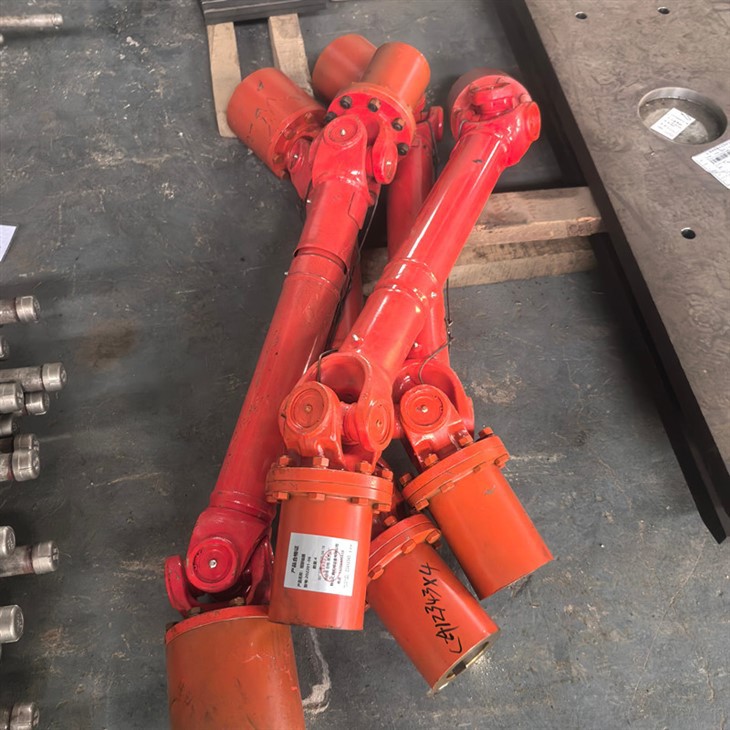

Applications of Flange Type Cardan Shafts
Flange Type Cardan Shafts are used in a wide range of applications across various industries. Some of the most common applications include:
- Automotive Industry: In vehicles, Flange Type Cardan Shafts are used to transmit power from the engine to the wheels. They are commonly found in rear-wheel drive and four-wheel drive vehicles, where they allow the drive shaft to flex and adapt to the movement of the suspension.
- Industrial Machinery: Flange Type Cardan Shafts are also widely used in industrial machinery, such as conveyors, crushers, and mixers. They are used to transmit power between different components of the machinery, allowing for smooth and efficient operation.
- Marine Industry: In the marine industry, Flange Type Cardan Shafts are used to transmit power from the engine to the propeller. They are designed to withstand the harsh conditions of the marine environment, including saltwater corrosion and high loads.
- Aerospace Industry: In the aerospace industry, Flange Type Cardan Shafts are used in aircraft engines and other critical components. They are designed to be lightweight and reliable, ensuring the safe and efficient operation of the aircraft.
Benefits of Using Flange Type Cardan Shafts
There are several benefits to using Flange Type Cardan Shafts in power transmission systems. Some of the key benefits include:
- High Torque Transmission: Flange Type Cardan Shafts are capable of transmitting high torque loads, making them suitable for applications where large amounts of power need to be transferred.
- Angular Misalignment Compensation: As mentioned earlier, Flange Type Cardan Shafts can accommodate angular misalignment between the two shafts. This helps to reduce stress on the shafts and other components in the power transmission system, extending their lifespan.
- Smooth Operation: The universal joint design of Flange Type Cardan Shafts allows for smooth and continuous power transmission, even when the shafts are at different angles. This helps to reduce vibration and noise in the system, improving overall performance.
- Versatility: Flange Type Cardan Shafts can be used in a wide range of applications, making them a versatile choice for power transmission systems. They can be customized to meet the specific requirements of different industries and applications.
Comparison with Other Coupling Types
While Flange Type Cardan Shafts offer many benefits, it is important to compare them with other coupling types to determine the best option for a particular application. Some of the other common coupling types include Cross Shaft Universal Coupling, Flexible Tyre Coupling, and Cross Slider Coupling.
- Cross Shaft Universal Coupling: Similar to the Flange Type Cardan Shaft, the Cross Shaft Universal Coupling is used to transmit torque between two shafts at an angle. However, it typically has a simpler design and is less expensive. It is often used in applications where the angular misalignment is relatively small.
- Flexible Tyre Coupling: The Flexible Tyre Coupling uses a rubber tyre to transmit torque between the two shafts. It is designed to absorb shock and vibration, making it suitable for applications where there is a lot of movement or vibration. However, it has a lower torque capacity compared to Flange Type Cardan Shafts.
- Cross Slider Coupling: The Cross Slider Coupling uses a sliding mechanism to transmit torque between the two shafts. It is designed to accommodate axial movement and misalignment, making it suitable for applications where there is a lot of movement or vibration. However, it has a lower torque capacity compared to Flange Type Cardan Shafts.
Factors to Consider When Choosing a Flange Type Cardan Shaft
When choosing a Flange Type Cardan Shaft for a particular application, there are several factors to consider. Some of the key factors include:
- Torque Capacity: The torque capacity of the Flange Type Cardan Shaft should be sufficient to handle the load requirements of the application. It is important to choose a shaft with a torque capacity that is higher than the maximum expected load.
- Angular Misalignment: The Flange Type Cardan Shaft should be able to accommodate the angular misalignment between the two shafts. It is important to choose a shaft with a sufficient range of angular movement to ensure smooth and efficient power transmission.
- Speed Rating: The speed rating of the Flange Type Cardan Shaft should be compatible with the operating speed of the application. It is important to choose a shaft with a speed rating that is higher than the maximum expected speed.
- Environment: The Flange Type Cardan Shaft should be able to withstand the environmental conditions of the application. It is important to choose a shaft that is made of materials that are resistant to corrosion, wear, and other environmental factors.
Conclusion
In conclusion, the Flange Type Cardan Shaft plays a crucial role in power transmission systems. Its ability to accommodate angular misalignment, transmit high torque loads, and provide smooth operation makes it a popular choice for a wide range of applications. As a supplier of Flange Type Cardan Shafts, I am committed to providing high-quality products that meet the specific requirements of our customers. If you are in need of a Flange Type Cardan Shaft for your power transmission system, I encourage you to contact us to discuss your needs and explore the options available. We look forward to working with you to ensure the efficient and reliable operation of your power transmission system.
References
- Budynas, R. G., & Nisbett, J. K. (2011). Shigley's Mechanical Engineering Design. McGraw-Hill.
- Norton, R. L. (2006). Design of Machinery: An Introduction to the Synthesis and Analysis of Mechanisms and Machines. McGraw-Hill.
- Spotts, M. F., Shoup, T. E., & Taborek, J. J. (2004). Design of Machine Elements. Prentice Hall.