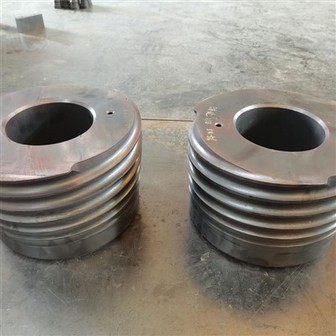

Working principle of coupling
Couplings are like matchmakers in the mechanical world, bringing together two rotating shafts. Their core functions are twofold:
Power transmission: Transmitting the torque from the motor directly to the equipment.
Tolerance for errors: Skillfully resolving millimeter-level misalignments between the two shafts.
The most basic rigid couplings are fixed together like welding, while advanced flexible couplings gently cushion the impact like a spring.
Rigid Couplings: Directly bolted to the flange, requiring perfect concentricity of the two shafts, suitable for precision machine tools.
Flexible Couplings: Utilizing elastic elements such as rubber pads and metal springs, they can absorb 3-5mm of radial misalignment, commonly found in fans and pumps.
Interestingly, some couplings can even "perform magic"-for example, gear couplings can automatically compensate for angular misalignment using the backlash between the gear teeth.
Survival Guide for Special Environments
When faced with extreme operating conditions, the coupling reveals its hidden capabilities:
High Temperature Challenge: Constructed of stainless steel with heat dissipation holes to prevent seizing due to thermal expansion.
Vibration Buster: Rubber components absorb over 80% of high-frequency vibrations like shock absorbers.
Corrosion Resistance: Polyurethane-coated couplings can operate reliably in acidic and alkaline environments.
Speed Difference Adjustment: Overrunning clutch couplings allow for asynchronous speeds between the drive and load sides.