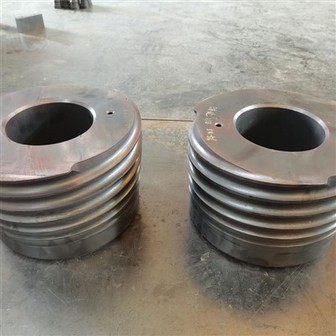

Introduction to Roll Forming Process
Roll forming (also known as profile forming or cold rolling) is a continuous forming process for metals from sheet and strip to coil. It involves feeding the material through a series of rolling mill stations equipped with profile rolls (sometimes called dies) to produce a uniform cross-sectional shape. Each station has two or more rolls, and most profile forming processes use two or more rolling mill stations to progressively process the blank until the finished shape is produced. This process is suitable for high-volume production and high-precision long workpieces with minimal operational intervention. Auxiliary processing such as notching, grooving, punching, embossing, bending, and winding can also be performed simultaneously with profile forming.
Roll forming can also be used to process parts that have already undergone extrusion processes. However, this application is limited to parts whose wall thickness has not been changed during redesign. Industries using roll-formed products include the automotive, construction, office furniture, home appliances and furnishings, medical, railway locomotives, aircraft, and heating, ventilation, and air conditioning (HVAC) industries. Roll forming can be divided into two main categories: processes that use pre-cut metal materials to be processed to the required size (pre-cutting method or fixed-length method); and processes that use coiled materials and then cut them to the required size after forming (post-cutting method).