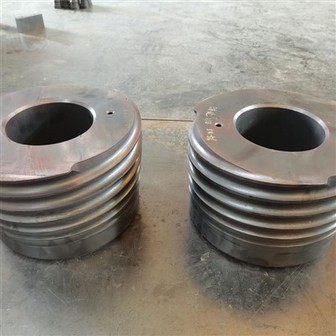

The fit between the coupling and the shaft
The Golden Rules of Tolerance Selection
The fit between a coupling and a shaft is like wearing shoes-too tight and your foot will hurt; too loose and they'll fall off. An ideal fit requires balancing two aspects:
Transition Fit: Shaft diameter 0.01-0.03mm larger than bore, suitable for frequent disassembly.
Interference Fit: Shaft diameter 0.03-0.08mm larger, used for high-speed, heavy-load applications.
Clearance Fit: Retains a 0.02-0.05mm clearance to accommodate thermal expansion and contraction.
Three Classic Fit Options
Keyway Fit: Torque is transmitted via a flat key; shaft and bore tolerances are controlled within ±0.015mm.
Tapered Fit: Utilizes a 1:10 taper for self-locking; axial displacement after assembly is approximately 0.5-1mm.
Clamping Fit: Split couplings are tightened with bolts, allowing ±0.1mm adjustment space.
Practical Adjustment Techniques
These field tips can prevent 90% of assembly problems:
Temperature Difference Method: Heating the coupling to 80-100℃ makes installation easier.
Lubrication Selection: Molybdenum disulfide paste is better at preventing fretting wear than machine oil.
Alignment Inspection: Every 0.1mm of misalignment can increase vibration by 30%.